HP Latex 836 Thermal Inkjet Printhead
HP Latex 836 Thermal Inkjet Printheads power the latest generation of HP Latex production printers, including the HP Latex 700, 700W, 800, 8...
In Stock · Ready to Ship
Wholesale Price Range: $228.19
Physical properties, thermal tolerances, and regulatory certifications tested according to ASTM standards.
| Technology | HP Thermal Inkjet Micro-Fluidic Drop-on-Demand |
|---|---|
| Nozzle Count | 1,056 Nozzles per Color Channel (2,112 Total per Printhead) |
| Native Resolution | 1200 DPI |
| Compatible Printers | HP Latex 110, 310, 315, 330, 335, 360, 365, 370, 560, 570 |
| Replacement Type | User-Replaceable (No Tools, 90-Second Hot Swap) |
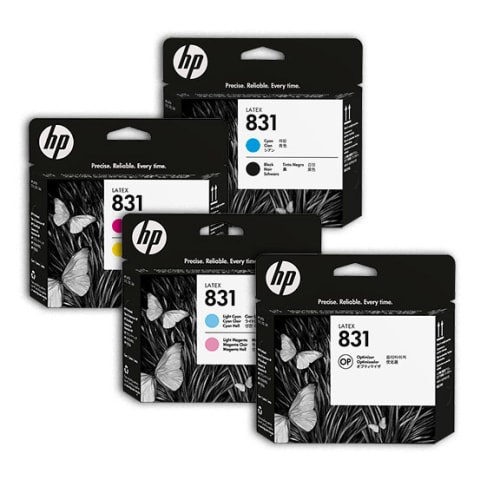
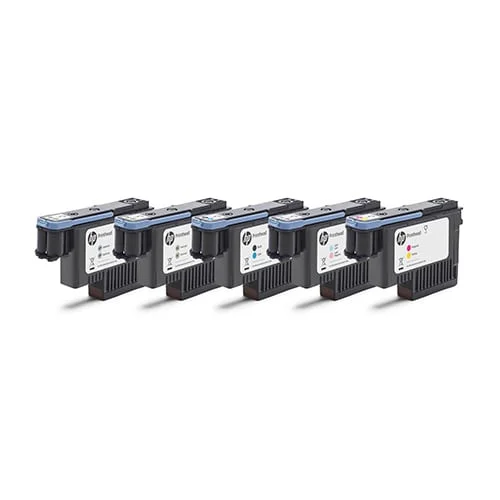
HP 831 Latex Printheads are the proven production workhorse powering thousands of commercial print shops operating HP Latex 300 series (315, 335, 365) and 500 series (560, 570) printers. Featuring 1,056 nozzles per color channel running at native 1200 dpi, HP 831 printheads deliver sharp 4-point text, smooth color gradients, and deep optical black densities.
Unlike traditional wide-format piezo heads that require expensive technician service calls, HP 831 printheads are completely user-replaceable. Operators can swap a spent head in 90 seconds with zero tools, eliminating costly downtime during high-priority vehicle wrap and banner deadlines.
Equipped with automated nozzle redundancy, the printer onboard Optical Drop Detector automatically detects and compensates for weak or clogged nozzles, ensuring uninterrupted print perfection.
Thermal micro-resistors fire 12-picoliter ink droplets at extreme velocity.
Onboard chip communicates ink consumption and nozzle health directly to printer firmware.
Factory-sealed in vacuum packaging to guarantee fresh nozzle plate condition upon delivery.
Production-verified mechanical settings to eliminate banding, head-strikes, and thermal substrate distortion.
Compatible with HP Latex 110, 300 series, and 500 series printers.
N/A (Exclusively for HP Latex 831 carriage).
Direct BendiRIP profile sync for automatic printhead alignment.
Immediate post-swap calibration via automated optical sensor.
Mandatory shop guidelines to achieve full adhesive cure, bubble-free adhesion, and zero-defect delivery.
Select "Replace Printhead" on printer front panel.
Open carriage latch and remove spent printhead.
Uncap fresh HP 831 printhead, insert into carriage, and latch securely.
Allow printer to run automatic optical alignment.
Replace printer maintenance cartridge regularly to maintain clean nozzle plates.
Covered under HP OEM Printhead Limited Warranty.
Certified diagnostic guidelines to prevent adhesive delamination, outgassing hazing, and platen feed anomalies.
Maintaining zero-defect print and installation throughput requires strict adherence to standardized shop protocols when working with HP 831 Latex Printhead. The interaction between substrate surface energy, ink carrier solvents, platen vacuum draw, and environmental humidity represents the most frequent origin of field failures in commercial wide-format graphics. By implementing systematic pre-flight checks, sign shops eliminate costly reprints, adhesive tenting, and warranty disputes.
When deploying self-adhesive vinyl substrates and overlaminating films, the primary cause of graphic failure is premature lamination before volatile organic compounds have fully escaped. Solvent and eco-solvent ink chemistry deposits aggressive carrier glycols that penetrate the vinyl face film. If laminated prior to complete chemical evaporation, trapped solvents soften the pressure-sensitive acrylic adhesive layer, producing tunneling, milky silvering, and edge curl under direct sunlight. Conversely, latex ink platforms require adequate curing platen heat (typically 210°F to 220°F / 99°C to 105°C) to fully polymerize the latex resin envelope; under-cured latex prints exhibit ink wiping, poor abrasion resistance, and adhesive transfer during roll windup.
For wide-format banner media and flexible scrim substrates, platen head strikes represent the single largest hazard to printer uptime. Heavy banner materials (13 oz to 15 oz) and mesh media retain slight manufacturing curl at roll edges. Operators must set printhead carriage height to the "High" position (typically 2.0 mm to 2.5 mm above platen level) and engage edge media guards to prevent curling corners from catching on delicate thermal nozzle faceplates. Maintaining balanced unwind tension prevents lateral media drift and diagonal skewing across extended 20-foot and 50-foot continuous print runs.
Optimal climate tolerances and material handling practices to preserve adhesive tack and dimensional stability.
Large-format digital media rolls are hygroscopic and thermosensitive composite materials that respond directly to ambient shop environments. Rolls stored in unheated warehouses or delivered during winter freight cycles undergo thermal contraction and absorb atmospheric moisture. Loading a cold roll directly onto an active wide-format printer causes instantaneous condensation on the vinyl or banner surface as it enters heated platen zones, causing ink droplet pooling, micro-banding, and severe feed slip on feed rollers.
Always acclimate rolls inside the climate-controlled print production room for a minimum of 24 hours prior to unboxing. Ideal shop conditions must be maintained between 68°F and 74°F (20°C to 23°C) with relative humidity stabilized between 40% and 55%. Never store rolls horizontally on concrete floors, as point-load compression creates flat spots along the core, leading to persistent cyclic feed banding during subsequent printing. Utilize vertical roll racks or heavy-duty suspension roll trees that support rolls by their core plugs.
Between production runs, immediately re-wrap unused roll yardage with original poly wrap and secure with low-tack roll clips. Do not use standard packing tape or duct tape directly against the printable vinyl face, as adhesive residues ruin the outer yards of substrate. When handling printheads, maintenance assemblies, or OEM ink pouches, maintain cleanroom cleanliness standards: store consumables in sealed factory packaging away from static generators, direct UV sunlight, and volatile chemical vapors.
Turnkey color management, ink limiting, and automated compensation curves engineered specifically for HP 831 Thermal Inkjet Printheads.
Achieving photographic skin tones, deep neutral grays, and brand-accurate Pantone spot colors on HP 831 Thermal Inkjet Printheads requires synchronized linearization and output ICC profiles. BendiRIP features native Output Media Synchronization (OMS) profiles engineered specifically for the chemical topcoat and absorption rate of this exact SKU. By downloading and synchronizing the verified profile into your BendiRIP print queue, the software automatically configures total ink limits, pass counts, drop-on-demand firing frequencies, and drying platen thermal curves.
Using generic or uncalibrated media profiles frequently results in over-saturation where total ink density exceeds 260% to 300%. Over-inking wastes expensive ink consumables, increases outgassing time by up to 300%, and causes fine reverse text to bleed and close up. BendiRIP native media profiles employ sophisticated G7 gray-balance linearization and intelligent ink-limiting algorithms that yield rich chromatic gamut volume while reducing overall ink consumption by 15% to 22% compared to standard factory profiles.
For digital print-and-cut workflows involving roll cutters or flatbed digital finishing tables, BendiRIP embeds high-precision optical barcode markers and registration targets directly into the print border. This synchronizes cut-contour files with millimeter precision, eliminating cutting drift over 50-yard print runs. Production managers can monitor real-time square-footage media consumption, ink cost per square foot, and remaining roll yardage directly through the BendiStudio interface.
Evaluate structural conformability, adhesive characteristics, and thermal handling against comparable media.
| Performance Characteristic | HP 831 Thermal Inkjet Printheads (This Media) | HP 836 Printheads | Piezo Printheads |
|---|---|---|---|
| Replacement Mode | User-Replaceable (90 sec) | User-Replaceable (90 sec) | Technician Required ($1,500+) |
| Compatible Machines | Latex 300 / 500 Series | Latex 700 / 800 / 630 | Roland / Mimaki |
Direct operational and engineering answers regarding installation, machine profiling, contour cutting, and outgassing.
HP Latex 110, 310, 315, 330, 335, 360, 365, 370, 560, and 570 printers.
No. They are 100% user-replaceable by lifting the carriage latch and dropping in the new printhead.