BendiRip App Logo Icon
BendiRip
Print Shop Manager

Cleaning Supplies & Assemblies

OEM Maintenance Cartridges, Cleaning Rolls & Lint-Free Printhead Swabs

In digital wide-format printing, preventative maintenance is the proven difference between continuous high-margin profitability and costly, unscheduled downtime. Daily production generates microscopic ink aerosols, volatile solvent vapors, and airborne dust particles that settle on capping stations, platen vacuum channels, and printhead faceplates.

BendiShop provides commercial sign shops with genuine OEM maintenance cartridges and industrial-grade cleaning tools. Our inventory includes genuine HP 831 maintenance cartridges for HP Latex 300/500 series machines, HP 832/836 maintenance cartridges for 700/800/630 printers, and professional 20/20 lint-free foam cleaning swabs.

By automating printhead wiping with fresh textile fabric rolls and providing lint-free manual swabbing tools, our maintenance products prevent nozzle clogging, eliminate back-side media scuffing, and protect internal optical drop sensors.

Media Specification Comparison

Maintenance Supply Compatibility Guide

Match maintenance assemblies and cleaning tools to your printer fleet:

Supply ItemManufacturerTypeTarget PrintersReplacement Frequency
HP 831 Maintenance CartridgeHP Latex OEMAutomated Cleaning RollHP Latex 110, 310, 315, 330, 335, 360, 365, 370, 560, 570Every 15-30 Liters of Ink
HP 832/836 Maintenance CartridgeHP Latex OEMAutomated Cleaning RollHP Latex 630, 630W, 700, 700W, 800, 800WEvery 15-30 Liters of Ink
20/20 Wide Foam Swabs (50-Pack)OEM CertifiedLint-Free Foam SwabsUniversal: HP Latex, Roland TrueVIS, Mimaki, EpsonDaily / Weekly Manual Care

Available Cleaning Supplies & Assemblies Products (2)

Direct OEM rolls and certified supplies available with same-day commercial shipping.

Open Full Interactive Catalog →
Genuine HP Latex Maintenance Cartridges In Stock
HP Latex OEM Cleaning Supplies & Assemblies

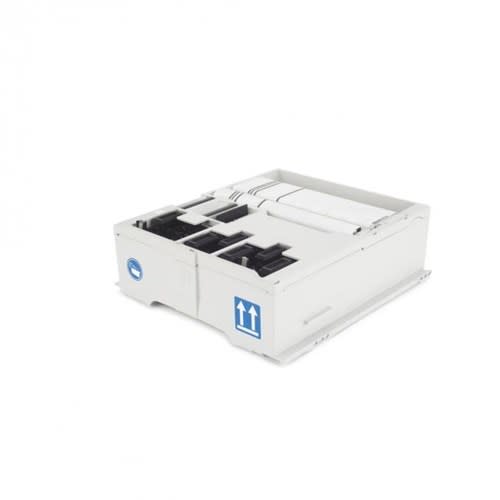
Genuine HP Latex Maintenance Cartridges

Genuine HP Latex Maintenance Cartridges are the unsung heroes of uninterrupted commercial wide-format printing. Housing an automated, motor-...

Technology: Automated Micro-Motor Driven Non-Woven Fabric Cleaning WebCompatible Printers (831): HP Latex 110, 310, 315, 330, 335, 360, 365, 370, 560, 570Compatible Printers (832/836): HP Latex 630, 630 W, 700, 700 W, 800, 800 W
20/20 Wide Foam Printhead Cleaning Swabs (50-Pack) In Stock
OEM Certified Cleaning Supplies & Assemblies

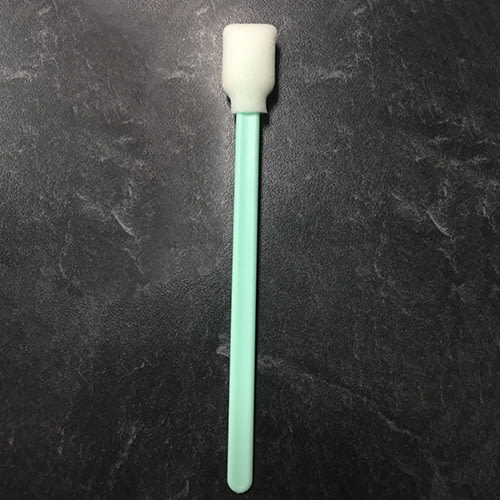
20/20 Wide Foam Printhead Cleaning Swabs (50-Pack)

In precision wide-format digital printing, standard cotton swabs must strictly never be used near printheads or capping stations. Cotton swa...

Head Material: 100 PPI Reticulated Open-Cell Polyurethane FoamHead Bonding: Thermally Welded (Zero Adhesives, Glues, or Binders)Shaft Construction: Rigid Green Polypropylene Handle
Shop Operating Procedures

Sign Shop Weekly Preventative Maintenance Checklist

Standard shop workflows engineered to prevent warranty claims, adhesive pop-out, and visual defects.

1

Automated Cleaning Roll Verification

Check remaining maintenance cartridge fabric percentage on printer front panel. Replace before long overnight production runs.

2

Carriage Underside & Capping Station Swabbing

Dampen a 20/20 foam swab with distilled water or approved flush. Swab around (never across) printhead faceplate perimeters and rubber capping seals.

3

Platen Vacuum Rib Decontamination

Inspect the print platen ribs for ink splatter or adhesive residue. Wipe clean with an approved cleaner to prevent substrate back-side marking.

4

Optical Drop Detector Sensor Cleaning

Gently wipe the glass window of the Optical Drop Detector (ODD) with a clean, dry foam swab to ensure accurate nozzle diagnostics.

Materials Science & Engineering

Maintenance Cartridge Web Advance & Foam Swab Engineering

The maintenance cartridge in HP Latex printers operates as an automated clean-room station. It houses an electric-motor-driven web advance mechanism containing a continuous roll of proprietary non-woven absorbent fabric. During every wiping cycle, the carriage sweeps over the cartridge, which indexes fresh fabric against the printhead nozzle plates. This absorbs residual ink mist and cleans crusting without dragging contaminants across adjacent nozzles.

Traditional cotton swabs must strictly be avoided in wide-format maintenance. Cotton fibers easily fray, catching on microscopic 20-micron nozzle openings and creating permanent spray deflection errors. Furthermore, many commercial cotton swabs use adhesive glues to bind fibers to wooden shafts, which dissolve into ink capping stations.

Our 20/20 wide foam cleaning swabs feature open-cell 100 PPI (pores per inch) polyurethane foam thermally bonded to rigid polypropylene shafts. They shed zero lint or particles, resist aggressive solvent degradation, and provide maximum liquid capacity for cleaning capping gaskets, platen ribs, and carriage housings.

End-to-End Production Workflow

Optimizing Cleaning Supplies & Assemblies with BendiRIP & Matched Finishing

Achieving photographic print quality, vibrant chromatic saturation, and maximum outdoor service life on cleaning supplies & assemblies requires precise synchronization between the RIP raster engine, ink deposit volume, curing heat profiles, and paired overlaminates. When using BendiRIP, operators gain access to certified native color profiles that optimize drop placement and limit excessive ink loads. Over-inking vehicle media or banner substrates leads to prolonged outgassing cycles, ink re-tack, and localized adhesion failure.

For digital sign shops producing commercial fleet markings and outdoor signage, always observe the 24-hour outgassing requirement when printing on solvent or eco-solvent hardware. Un-outgassed volatile organic compounds (VOCs) trapped beneath an impervious overlaminate will soften the pressure-sensitive acrylic adhesive, causing severe clouding, tunnel delamination, and adhesive bubbling in direct sunlight. Conversely, HP Latex ink platforms polymerize instantly in the curing module platen, allowing finished graphics to transition directly to the cold roll laminator without drying racks.

Ensure roll tension is properly calibrated on your feed and take-up assemblies. Uneven feed drag induces diagonal media skew and media wrinkling inside the platen area, risking catastrophic printhead strikes that ruin both the print substrate and thermal nozzle plates. Consult the BendiRIP hardware integration utility to automatically synchronize media advance factors (OPI / OMAS) for every roll in our catalog.

Quality Assurance & Standard Operating Procedures

Commercial Production Protocols for Cleaning Supplies & Assemblies

High-volume commercial sign production requires rigorous process discipline to maintain repeatable chromatic fidelity and mechanical bond strength across multiple rolls. When processing cleaning supplies & assemblies, production supervisors should implement pre-flight verification covering incoming media lot inspection, platen humidity monitoring, and automated printhead nozzle health testing. A single uncorrected clogged nozzle can manifest as micro-banding across hundreds of square feet of finished graphics, resulting in costly waste and missed installation deadlines.

Environmental stability is vital for digital media dimensional integrity. Calendered and cast PVC films, scrim banners, and polyester textiles expand and contract in response to ambient thermal fluctuations and moisture gradients. Maintain print production environments at 68°F to 74°F (20°C to 23°C) with stable 45% to 55% relative humidity. When receiving rolls during severe winter or summer transport, enforce a mandatory 24-hour acclimatization window inside the print room prior to slicing shrink-wrap. Unrolling cold media onto hot printer platen heating elements causes immediate platen condensation, localized media cockling, and severe ink droplet coalescence.

Establish strict take-up tension calibration for all continuous production runs. Over-tensioning take-up reels stretches elastic cast films and lightweight banner media around the windup mandrel. When finished graphics are subsequently sheeted and cut on cutting tables, the stretched elastic vinyl recovers, inducing curl along panel perimeters. Utilizing BendiRIP automated media feed compensation (OMAS optical calibration) ensures micro-step accuracy and zero media skewing across full 50-yard roll runs.

Sign Shop Economics

Job Costing, Nesting Optimization & Yield Management

Profitable sign shop operations depend on maximizing square-footage yield per roll and minimizing consumable waste. When nesting multi-panel vehicle wraps or large banner layouts in BendiRIP, utilize the automated true-shape nesting engine to rotate and interlock irregular vector shapes. Strategic nesting can improve substrate utilization by 18% to 27%, directly reducing media expenditure per job.

Always account for bleed, overlap margins, and cutter registration lead-in when estimating yardage requirements for cleaning supplies & assemblies. For multi-panel architectural wall murals and fleet box wraps, standard industry practice specifies a 0.5-inch to 1-inch panel overlap with matched vertical tile alignment. Failing to calculate panel overlap during media quoting leads to short rolls and costly emergency shipping fees.

Implement barcode tracking for partial rolls. Every time a roll is removed from the printer spindle with remaining yardage, generate a BendiStudio inventory tag indicating the exact footage remaining. Storing tagged partial rolls vertically in dedicated suspension racks protects valuable inventory from edge impact damage, dust contamination, and accidental obsolescence.

Cleaning Supplies & Assemblies — Practical Technical FAQs

Direct operational guidance addressing real-world sign shop installation, curing parameters, and substrate selection.

Why does an HP Latex printer stop printing when the maintenance cartridge is full?

The maintenance cartridge contains a smart chip that monitors fabric usage and waste ink capacity. When full, the machine pauses to prevent waste ink overflow into internal printer electronics.

Can I rewind an HP maintenance cartridge to reuse the clean sections?

No. Reused fabric contains dried resin and pigment crusts that will physically scratch delicate printhead nozzle plates, destroying thousands of dollars in printheads.

How many swabs are included in a pack of 20/20 foam cleaning swabs?

BendiShop packs contain 50 industrial-grade, lint-free wide foam swabs packaged in a resealable anti-static cleanroom bag.

Can 20/20 foam swabs be used on solvent printers like Roland and Mimaki?

Yes. The open-cell polyurethane foam is chemically inert and fully compatible with aggressive eco-solvent inks, flushing fluids, and isopropyl alcohol.

What is the difference between HP 831 and HP 832/836 maintenance cartridges?

HP 831 maintenance cartridges fit HP Latex 300 and 500 series machines. HP 832/836 cartridges (part # 4UV99A) fit the newer HP Latex 630, 700, and 800 series.

How often should the capping station be cleaned manually?

In high-production shops running 40+ hours per week, manual swabbing of the capping station seals and wiper blades should be performed weekly.

Should I clean the printhead nozzle plate directly with a swab?

No. Never scrub directly across the nozzle orifices. Swab only around the metal perimeter of the printhead faceplate. Let the automated maintenance cleaning roll clean the nozzles.

Are maintenance cartridges covered under BendiShop same-day dispatch?

Yes. All genuine maintenance cartridges and cleaning swabs ordered before 2:00 PM EST dispatch the same business day.