BendiRip App Logo Icon
BendiRip
Print Shop Manager
Duratex 13oz Reverse Wound Scrim Banner In Stock · Ready to Ship
100% Genuine OEM Factory-sealed master packaging
Fast Dispatch Same-day on orders by 2 PM EST
BendiRIP Certified Integrated color profiles & presets

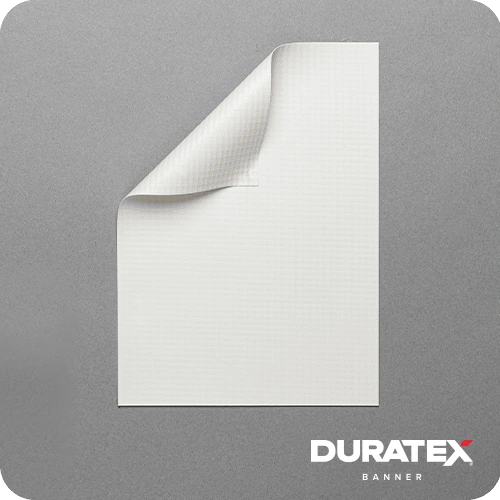
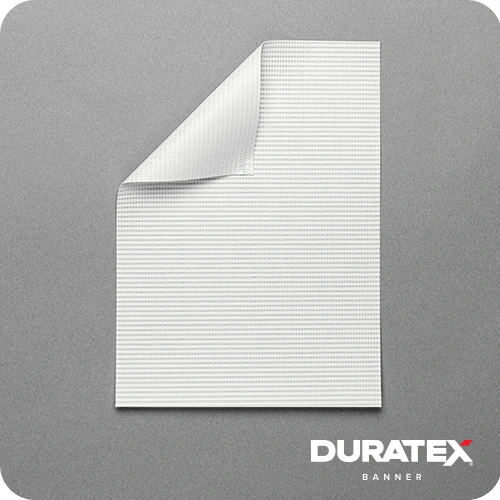
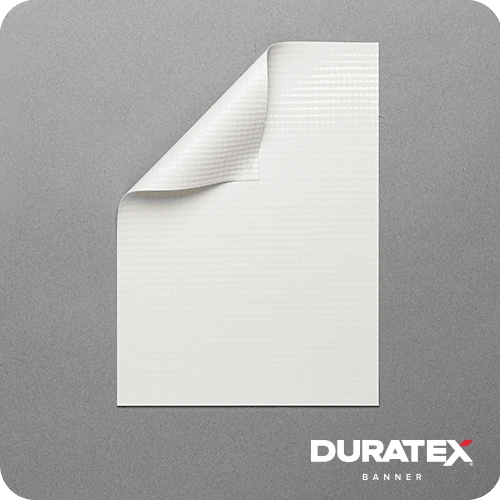
Duratex 13oz Reverse Wound Scrim Banner

Wholesale Price Range: $95.00 - $125.00

$ 95.00 / unit
SKU: DTX13SCRIM-54
Same-day dispatch for orders placed before 2:00 PM EST · Factory Sealed OEM

Key Commercial Specs:

Weight 13 oz/yd² (440 g/m²)
Scrim Construction 1000 x 1000 Denier (9 x 9 Weave)
Winding Direction Reverse-Wound (Print Side Facing In)
Tensile Strength Warp: 135 lbs/in, Weft: 120 lbs/in (ASTM D751)
Tear Resistance Warp: 45 lbs, Weft: 40 lbs
Fire Rating NFPA 701 Fire Certified
Laboratory & Field Data

Certified Technical Specifications · Duratex 13oz Reverse Wound Scrim Banner

Physical properties, thermal tolerances, and regulatory certifications tested according to ASTM standards.

Weight 13 oz/yd² (440 g/m²)
Scrim Construction 1000 x 1000 Denier (9 x 9 Weave)
Winding Direction Reverse-Wound (Print Side Facing In)
Tensile Strength Warp: 135 lbs/in, Weft: 120 lbs/in (ASTM D751)
Tear Resistance Warp: 45 lbs, Weft: 40 lbs
Fire Rating NFPA 701 Fire Certified
Outdoor Durability Up to 2 Years Outdoor Vertical
Material Performance

Product Overview & Commercial Capabilities

Duratex 13oz Reverse Wound Scrim Banner offers the exact same heavy-duty 1000 x 1000 denier reinforced construction as our forward-wound banner, but with the printable surface rolled facing inward. This configuration is specifically required by certain grand-format UV printers, high-speed billboard production engines, and dedicated unwind stations that feed from the underside of the roll.

With robust tear-propagation resistance, excellent weatherproofing, and a smooth gloss white printable face, Duratex 13oz reverse-wound handles high-speed commercial production runs without web flutter or edge curl.

Ideal for grand-format billboard posters, building wraps, exterior wall graphics, and heavy perimeter fencing banners.

Chemical Formulation & Polymer Science

Substrate Architecture & Adhesive Chemistry

1000 x 1000 denier woven polyester core encased in flexible white PVC.

Reverse-wound orientation protects the print surface from airborne dust and scratches prior to entering the printer platen.

NFPA 701 flame-retardant certification.

Hardware & RIP Calibration

Print, Curing & BendiRIP RIP Engine Parameters

Production-verified mechanical settings to eliminate banding, head-strikes, and thermal substrate distortion.

HP Latex Printer Platform

Compatible with rear feed setups on HP Latex.

Roland & Mimaki Eco-Solvent

Compatible with bottom unwind roll spindles.

BendiRIP Native Color Profiles

Direct BendiRIP profile sync for fast turnaround and accurate color matching.

Curing & Outgassing Protocol

Latex dries instantly. Solvent prints dry within 30 minutes.

Shop Operating Procedures

Professional Installation & Handling Protocol

Mandatory shop guidelines to achieve full adhesive cure, bubble-free adhesion, and zero-defect delivery.

1

Load roll according to machine reverse-wound unwind orientation.

2

Hem edges using banner tape or hot-air wedge welders.

3

Grommet every 24 inches for secure exterior tensioning.

System Compatibility

Matched Overlaminate Pairing

Recommended Laminate: Direct print (unlaminated standard).
Alternative Option: Liquid UV clear coat for multi-year billboard use.

Heavy PVC coating provides excellent native UV and weather protection.

Longevity Assurance

Outdoor Durability & Warranty

Outdoor Vertical Exposure: Up to 2 years outdoor vertical durability.
Outdoor Horizontal Exposure: Not recommended for horizontal exposure.
Indoor Architectural Lifespan: 5+ years indoor longevity.

Covered under Duratex Warranty protocols.

Quality Assurance & Field Diagnostics

Production Quality Assurance · Duratex 13oz Reverse Wound Scrim Banner

Certified diagnostic guidelines to prevent adhesive delamination, outgassing hazing, and platen feed anomalies.

Maintaining zero-defect print and installation throughput requires strict adherence to standardized shop protocols when working with Duratex 13oz Reverse Wound Scrim Banner. The interaction between substrate surface energy, ink carrier solvents, platen vacuum draw, and environmental humidity represents the most frequent origin of field failures in commercial wide-format graphics. By implementing systematic pre-flight checks, sign shops eliminate costly reprints, adhesive tenting, and warranty disputes.

When deploying self-adhesive vinyl substrates and overlaminating films, the primary cause of graphic failure is premature lamination before volatile organic compounds have fully escaped. Solvent and eco-solvent ink chemistry deposits aggressive carrier glycols that penetrate the vinyl face film. If laminated prior to complete chemical evaporation, trapped solvents soften the pressure-sensitive acrylic adhesive layer, producing tunneling, milky silvering, and edge curl under direct sunlight. Conversely, latex ink platforms require adequate curing platen heat (typically 210°F to 220°F / 99°C to 105°C) to fully polymerize the latex resin envelope; under-cured latex prints exhibit ink wiping, poor abrasion resistance, and adhesive transfer during roll windup.

For wide-format banner media and flexible scrim substrates, platen head strikes represent the single largest hazard to printer uptime. Heavy banner materials (13 oz to 15 oz) and mesh media retain slight manufacturing curl at roll edges. Operators must set printhead carriage height to the "High" position (typically 2.0 mm to 2.5 mm above platen level) and engage edge media guards to prevent curling corners from catching on delicate thermal nozzle faceplates. Maintaining balanced unwind tension prevents lateral media drift and diagonal skewing across extended 20-foot and 50-foot continuous print runs.

Storage & Environmental Controls

Environmental Acclimatization & Roll Care Standards

Optimal climate tolerances and material handling practices to preserve adhesive tack and dimensional stability.

Large-format digital media rolls are hygroscopic and thermosensitive composite materials that respond directly to ambient shop environments. Rolls stored in unheated warehouses or delivered during winter freight cycles undergo thermal contraction and absorb atmospheric moisture. Loading a cold roll directly onto an active wide-format printer causes instantaneous condensation on the vinyl or banner surface as it enters heated platen zones, causing ink droplet pooling, micro-banding, and severe feed slip on feed rollers.

Always acclimate rolls inside the climate-controlled print production room for a minimum of 24 hours prior to unboxing. Ideal shop conditions must be maintained between 68°F and 74°F (20°C to 23°C) with relative humidity stabilized between 40% and 55%. Never store rolls horizontally on concrete floors, as point-load compression creates flat spots along the core, leading to persistent cyclic feed banding during subsequent printing. Utilize vertical roll racks or heavy-duty suspension roll trees that support rolls by their core plugs.

Between production runs, immediately re-wrap unused roll yardage with original poly wrap and secure with low-tack roll clips. Do not use standard packing tape or duct tape directly against the printable vinyl face, as adhesive residues ruin the outer yards of substrate. When handling printheads, maintenance assemblies, or OEM ink pouches, maintain cleanroom cleanliness standards: store consumables in sealed factory packaging away from static generators, direct UV sunlight, and volatile chemical vapors.

BendiRIP Color Engine Integration

BendiRIP OMS Media Profiles & Spectral Calibration

Turnkey color management, ink limiting, and automated compensation curves engineered specifically for Duratex 13oz Reverse Wound Scrim Banner.

Achieving photographic skin tones, deep neutral grays, and brand-accurate Pantone spot colors on Duratex 13oz Reverse Wound Scrim Banner requires synchronized linearization and output ICC profiles. BendiRIP features native Output Media Synchronization (OMS) profiles engineered specifically for the chemical topcoat and absorption rate of this exact SKU. By downloading and synchronizing the verified profile into your BendiRIP print queue, the software automatically configures total ink limits, pass counts, drop-on-demand firing frequencies, and drying platen thermal curves.

Using generic or uncalibrated media profiles frequently results in over-saturation where total ink density exceeds 260% to 300%. Over-inking wastes expensive ink consumables, increases outgassing time by up to 300%, and causes fine reverse text to bleed and close up. BendiRIP native media profiles employ sophisticated G7 gray-balance linearization and intelligent ink-limiting algorithms that yield rich chromatic gamut volume while reducing overall ink consumption by 15% to 22% compared to standard factory profiles.

For digital print-and-cut workflows involving roll cutters or flatbed digital finishing tables, BendiRIP embeds high-precision optical barcode markers and registration targets directly into the print border. This synchronizes cut-contour files with millimeter precision, eliminating cutting drift over 50-yard print runs. Production managers can monitor real-time square-footage media consumption, ink cost per square foot, and remaining roll yardage directly through the BendiStudio interface.

Competitive Benchmark

Comparative Analysis · Duratex 13oz Reverse Wound Scrim Banner vs. Industry Alternatives

Evaluate structural conformability, adhesive characteristics, and thermal handling against comparable media.

Performance Characteristic Duratex 13oz Reverse Wound Scrim Banner (This Media) Duratex 13oz Forward Wound Standard 10oz Scrim
Winding Direction Reverse-Wound (Print In) Forward-Wound (Print Out) Forward-Wound
Weight 13 oz/yd² 13 oz/yd² 10 oz/yd²
Target Printers Grand-Format UV / Specific Unwinds Standard HP Latex / Roland / Mimaki General

Duratex 13oz Reverse Wound Scrim Banner — Commercial Print Shop FAQs

Direct operational and engineering answers regarding installation, machine profiling, contour cutting, and outgassing.

Why choose reverse-wound banner over forward-wound?

Specific grand-format UV printers and billboard printing systems feed from the underside of the roll, requiring the printable face to be on the inside.

What roll widths are available?

Stocked in 54-inch x 50-yard master rolls.